Marketing & Promotions
Restaurant Gift Cards: How to Sell More of Them (and What They Actually Cost You)

By Daniel Ruiz, former NYC chef July 2026 11 min read
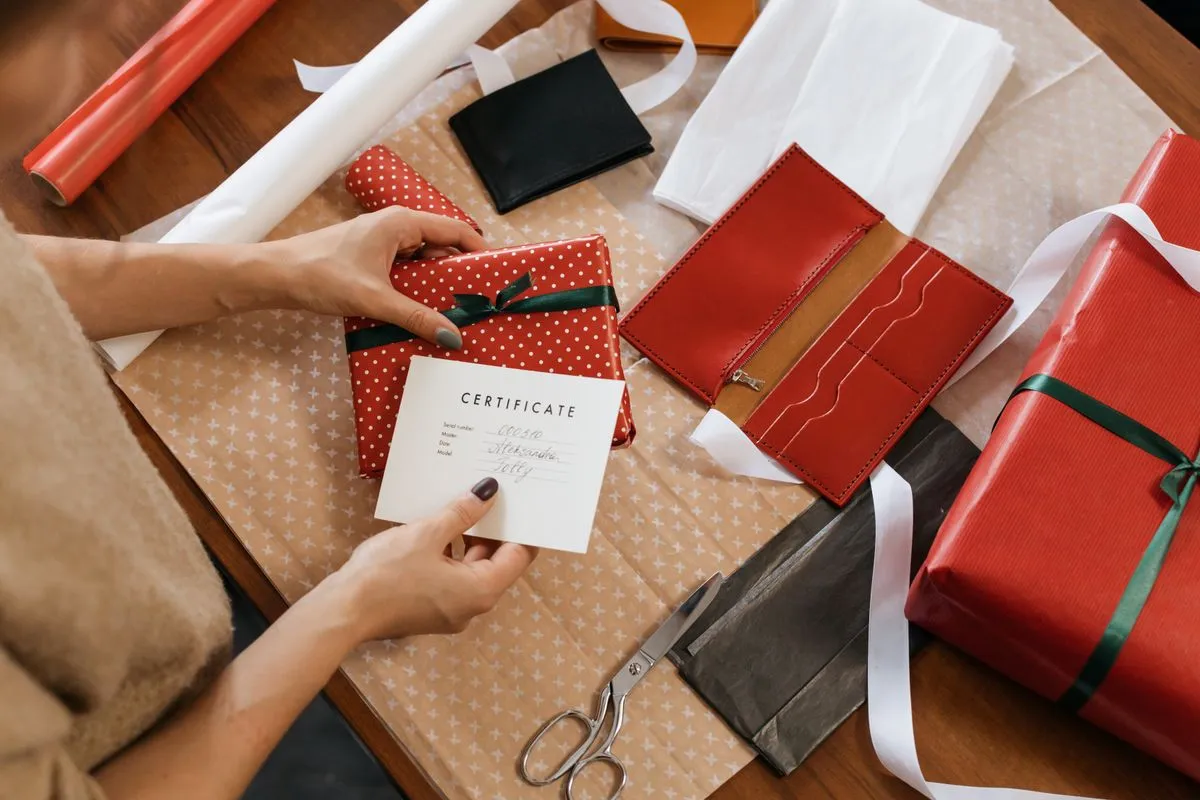
Restaurant gift cards are the rare promotion that pays you before it costs you. A guest hands you cash today, and you owe them food later. But that cash is not profit, it is a liability you will settle at food cost, so the real reason to sell gift cards is not the money in the till. It is that the person who redeems the card is usually someone who has never eaten in your restaurant, and a regular just paid you to bring them in.
December gift card season feels like a windfall. The register is fat, the cards are flying off the stand, and it is easy to look at that number and think you have had a very good month. Then February arrives, the cards come home, and half your dining room is eating food that was paid for eight weeks ago. That is not an argument against gift cards. It is an argument for knowing what you actually sold. Below is the operator's version: what a gift card really is on your books, how to price a bonus card without giving away your margin, when to push them, and what should happen the moment one gets handed to a server.
What you're really selling with a restaurant gift card
Every article you will read about restaurant gift cards treats them as a revenue line. They are not. On your books, a gift card sale is deferred revenue, which is the accountant's way of saying you took someone's money and now owe them something. It does not become revenue until the guest walks in and eats. Until then it sits on the wrong side of the ledger, and if you spend it like income you are spending food you have not bought yet.
That sounds like a warning. It isn't. It is the setup for the actual value, which almost nobody names out loud:
- The buyer and the eater are two different people. Somebody who already loves your restaurant is paying you to introduce it to a friend, a coworker, a mother-in-law. That is a referral with cash attached, and it is the single most valuable thing about the whole mechanism.
- The cash arrives before the cost. Cards bought in December get redeemed in January and February, which for most independents are the two ugliest months on the calendar. You are pulling holiday money forward into your dead season.
- Redemption rarely lands exactly on the number. In my experience nobody walks in with a $50 card and orders precisely $50 of food. They round up, they add a bottle, they bring someone. The card is a floor, not a ceiling.
So the frame to hold for the rest of this piece: you are not selling gift cards to make money in December. You are buying new guests in February, and someone else is picking up the tab.
Do restaurant gift cards actually make money?
Yes, but the profit shows up as a new regular, not as the face value of the card. Run the numbers on a single $100 card and the picture gets clear fast.
You collect $100 today. Months later the recipient redeems it against $100 of menu-price food. If you are running a typical 30% food cost, that food costs you $30 to put on the plate, so you clear roughly $70 before labor and overhead. That is the same margin you would have made if they had walked in and paid cash. The card did not create profit out of thin air.
What it did create is a guest who had never heard of you, sitting in your dining room, on a night you would otherwise have had an empty two-top. If that person comes back twice, the card just bought you a regular for the cost of one discounted cover. That is the whole trade, and it is a good one. It is also why chasing gift card volume for the cash flow alone is a trap: the money is real, but it is borrowed against your own kitchen, and the only thing that makes the loan worth taking is what you do with the guest when they show up.
Which means the gift card program lives or dies on one thing most restaurants skip entirely. When a card gets redeemed, get that guest on your list. They came in on someone else's dime. If they leave without joining your email list or your loyalty program, you paid for an introduction and then never called.
No time to build the holiday push between rushes?
The gift card campaign that actually works is a list, a landing page, and about six weeks of timing. If you'd rather have it handled by someone who has worked the line, that's what we do.
Physical cards, digital cards, or POS-integrated?
There are three ways to run this and the right answer depends less on your budget than on who is buying. Physical cards sell at the counter to people already standing in your restaurant. Digital cards sell at 11pm on December 22nd to someone who forgot a gift. Most restaurants need both, eventually.
| Physical cards | Digital (e-gift) | POS-integrated | |
|---|---|---|---|
| Rough cost | $0.30 to $1.50 per card printed, plus a stand | Free to a few percent per sale, depending on platform | Usually bundled into your POS plan or a small monthly add-on |
| Best at | Impulse buys at the register and by the host stand | Last-minute gifting, online, holidays, out-of-town buyers | Tracking balances automatically, multiple locations |
| Balance tracking | Manual unless your POS reads them | Automatic | Automatic |
| Real weakness | Only sells to people already in the room | Easy to forget in an inbox, no counter presence | Locks the program to your POS vendor |
| Start here if | You have a busy counter and no online ordering | You have a website and a decent email list | You have more than one location or high volume |
If you are starting from zero and want the cheapest useful version: order a few hundred physical cards, put them where people wait to pay, and turn on whatever digital option your existing restaurant website or ordering platform already includes. You do not need to buy a gift card platform to sell gift cards.
How do you actually sell more restaurant gift cards?
Nearly all of the volume comes down to whether anyone knows you have them. Most restaurants sell almost none, and then conclude gift cards don't work for their concept, when what actually happened is that the cards spent the year in a drawer behind the POS.
- Put them where people are already waiting. The register, the host stand, the takeout pickup counter. A card nobody sees is a card nobody buys.
- Make the server ask. One sentence when the check drops in November and December, "we've got gift cards if you're doing any holiday shopping." It feels small and it is the highest-leverage thing on this list.
- Email your list. Your regulars are the buyers. Two sends in December beat any amount of paid promotion, which is why the gift card push belongs inside your restaurant email marketing and not off in its own campaign.
- Put the link where people look. Your Instagram bio, your Google Business Profile, the header of your site. The last-minute buyer is searching on their phone and will give up in about nine seconds.
- Sell to businesses, not just people. Local offices buy staff gifts and client thank-yous in bulk, and a corporate order of thirty $50 cards is a single conversation. This is the part almost everyone misses, and it is the biggest single order most independents will get all year.
- Photograph them like food. A card in an envelope on a nice surface, shot the same way you would shoot a dish. Nobody buys the plastic rectangle, they buy the dinner it represents.
When should you run a gift card promotion?
The calendar does most of the work here, and it is remarkably consistent from concept to concept.

Late November through December 24th is the whole ballgame. This is where the overwhelming majority of gift card volume happens for restaurants, and the last week runs almost entirely on digital cards because physical ones can no longer arrive in time. If you only do one push a year, do this one, and make sure the e-gift link is impossible to miss from about December 18th on.
Mother's Day and Valentine's Day are the two other real ones, and they behave differently: those buyers are purchasing an occasion, not a gift card, so sell the experience and let the card be the delivery mechanism.
Graduation season in May and June is quietly decent, especially near a campus or a high school.
Everything else is noise. You are better off putting that energy into the promotions that fill a specific slow shift, which is a different problem with a different playbook, covered in how to increase restaurant sales.
How should you price a "buy $100, get $20" bonus card?
The bonus card is the standard holiday play, and it is worth understanding exactly what it costs before you print it, because the number is smaller than most operators fear and the mechanics are easy to get wrong.
Say you sell a $100 gift card and hand over a $20 bonus card with it. You collect $100. Eventually the guest redeems $120 of menu-price food, which at 30% food cost runs you $36 to produce. You clear about $64. Had you sold that $100 card with no bonus, you would have cleared about $70. So the bonus card costs you roughly $6 of margin per $100 sold, assuming both cards get fully redeemed and the guest spends nothing extra.
That is a cheap promotion. It is not a 20% discount on your business, which is what it feels like when you first write it on a chalkboard. And it comes with two structural advantages if you set it up properly:
- Put a January or February date on the bonus card. This is the whole point of the bonus. You are steering a discounted visit into your slowest weeks, when an extra cover is worth far more to you than it is in December.
- Keep the two cards physically separate. One purchased card, one bonus card, printed differently so nobody confuses them. Do not just load $120 onto a single card, because the moment you do, the deadline you wanted on the bonus is now sitting on money the guest actually paid you.
- Print the terms on the bonus card itself, and have your accountant or your POS provider confirm your setup before you run it. Ten minutes of that now saves you an ugly conversation at a table later.
What should happen when a guest walks in with a gift card?
This is the section nobody writes and it is the one that decides whether the whole program was worth doing. You have spent a season selling cards. Now a stranger is standing at your host stand holding one. What happens next is the entire return on the investment, and most restaurants fumble it completely.

Understand who just walked in. They are not a coupon-clipper. They are a first-timer holding a personal recommendation from someone who loves your restaurant. Somebody who eats with you looked at this person and said, in effect, "you have to try this place." That is a warmer introduction than any ad you will ever buy. Treat it accordingly:
- Train staff to notice. When a card comes out at the end of the meal, that is a signal a server should catch. A simple "was this your first time with us?" opens the door.
- Do not make them feel like they are spending someone else's money. No hovering, no reminding them of the balance, no treating the card like a discount. They are a guest. The money is already in your bank.
- Get the email before they leave. This is the whole ballgame. They came in on someone else's dime, and if they walk out without joining your list, you paid for an introduction and then never called. Hand them the sign-up card, point at the QR code, put them on your loyalty program right there at the table.
- Give them a reason to come back on their own money. A welcome perk on their next visit turns a one-time gifted meal into a second visit they pay for themselves. That second visit is where a gift card guest actually becomes profitable.
Get this right and a $100 card bought by a regular in December turns into a new regular by spring. Get it wrong and you served a free dinner to a stranger you will never see again.
What about the gift cards nobody ever redeems?
Some share of every batch you sell will never come back through the door. The industry term is breakage, and you will find plenty of confident percentages for it online, nearly all published by companies selling gift card software. I am not going to repeat any of them, because none of them trace back to a source I would stand behind.
How to book that unredeemed balance is a question for your accountant, and it is worth asking once rather than guessing at forever. What matters on the floor is simpler: do not build your program around cards going unused. A gift card plan that only pencils out if guests forget about it is not a marketing program, it is an accident you got away with.
Build it around the part that compounds instead. A regular pays you to introduce someone new. That person walks in, eats well, joins your list, and comes back in March on their own money. The card was never the product. The guest was.
Key takeaways
- A gift card sale is a liability, not revenue, until the guest eats. Cash in the till is food you have not yet bought.
- The real payoff is customer acquisition. The person redeeming the card usually isn't the person who bought it, so a regular is paying you to meet someone new.
- A "buy $100, get $20" bonus costs about $6 of margin per $100 at a 30% food cost, which is cheap for what it does.
- Date the bonus card into January or February. Promotional cards can carry an expiration; purchased cards legally cannot expire for five years.
- Capture the email at redemption, or you have paid for an introduction and then never followed up.
Frequently asked questions
Do restaurant gift cards make money?
They make money, but not the way most operators assume. A redeemed gift card earns you the same margin as any other check, so the cash you collect up front is not extra profit. The real return is that the person redeeming the card is usually a new guest brought in by an existing regular, which makes gift cards one of the cheapest ways an independent restaurant acquires customers.
Do restaurant gift cards expire?
Purchased gift cards cannot expire for at least five years under the federal Credit CARD Act of 2009, and inactivity fees are tightly restricted. Promotional or bonus cards given away as part of a promotion are generally exempt from those rules if clearly labeled as promotional, so they can carry a deadline. Several states go further than federal law, so check your state's statutes.
How much should a restaurant gift card bonus be?
A 20% bonus, such as a $20 card free with a $100 purchase, is the common standard and costs roughly $6 of margin per $100 sold at a 30% food cost. Give the bonus card an expiration in January or February so the discounted visit lands in your slowest weeks rather than during a busy December service.
How do restaurants sell more gift cards?
Visibility and the ask do almost all of the work. Put physical cards at the register and the host stand, have servers mention them when the check drops in November and December, email your list twice in December, and make the digital gift card link easy to find on your website and Instagram bio. Selling in bulk to local offices for staff and client gifts is the most overlooked channel.
When is the best time to promote restaurant gift cards?
Late November through December 24th accounts for the bulk of restaurant gift card sales, with the final week running mostly on digital cards since physical ones can no longer arrive in time. Mother's Day and Valentine's Day are the other two reliable windows, and graduation season in May and June is worth a small push if you are near a school.
What happens to unredeemed restaurant gift cards?
Unredeemed value, known as breakage, is not automatically yours to keep. Many states have unclaimed property or escheat laws requiring the balance be remitted to the state after a dormancy period, while others exempt gift cards. Ask your accountant how your state treats it, and never build a gift card program that depends on guests forgetting to use their cards.